
Il banco da falegname: un pezzo di storia in sala The carpenter's bench: a piece of history in the dining room
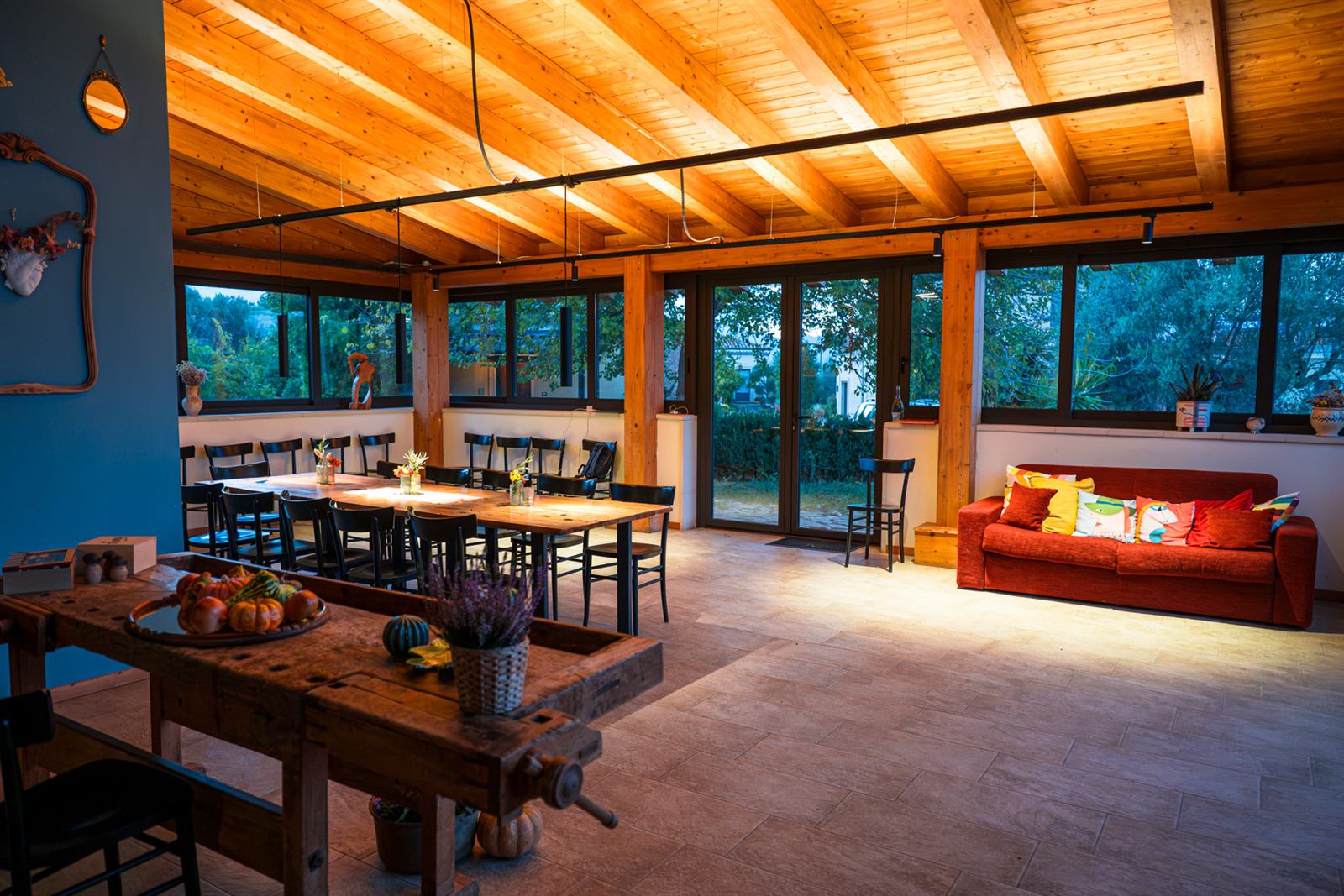
Nella sala del ristorante di Frangivento c'è un tavolo che non è mai stato pensato per essere un tavolo. È un banco da falegname, il banco da piallatura di chi lavorava il legno con le proprie mani, e ci racconta una storia molto più lunga di quanto sembri. In the dining room at Frangivento there is a table that was never meant to be a table. It is a carpenter's bench, the planing bench of someone who worked wood with their own hands, and it tells a far longer story than it seems.
Le origini / The origins
Il banco da falegname è il primo e più importante attrezzo nato per la lavorazione manuale del legno: serve a tenere fermo il pezzo mentre lo si taglia, pialla o fora, lasciando entrambe le mani libere. Le sue origini si fanno risalire all'epoca romana, quando con la diffusione della pialla nacque l'esigenza di bloccare saldamente il legno con cunei, pioli o fermi incastrati nel piano di lavoro. The carpenter's bench is the first and most important tool ever made for working wood by hand: it holds the piece still while you saw, plane or drill it, leaving both hands free. Its origins go back to Roman times, when the spread of the plane created the need to lock the wood firmly in place with wedges, pegs or stops set into the work surface.
Il Settecento e Roubo / The eighteenth century and Roubo
Il modello che conosciamo oggi si è definito nel Settecento, e da allora è rimasto quasi identico. Il riferimento storico più importante è il trattato L'Art du Menuisier, pubblicato tra il 1769 e il 1775 dal parigino André-Jacob Roubo: oltre 300 tavole incise che documentano nei minimi dettagli attrezzi, banchi e tecniche dei falegnami dell'epoca. È talmente centrale nella storia della falegnameria che ancora oggi si parla di banco alla Roubo, e a Parigi gli è stata dedicata una strada, rue Roubo, proprio nel quartiere dei mobilieri. The model we know today took shape in the eighteenth century, and has stayed almost unchanged ever since. The key historical reference is the treatise L'Art du Menuisier, published between 1769 and 1775 by the Parisian André-Jacob Roubo: over 300 engraved plates documenting in minute detail the tools, benches and techniques of the cabinetmakers of the time. It is so central to the history of the craft that people still speak of a Roubo bench, and Paris named a street after him, rue Roubo, right in the furniture makers' quarter.
Come funzionava / How it worked
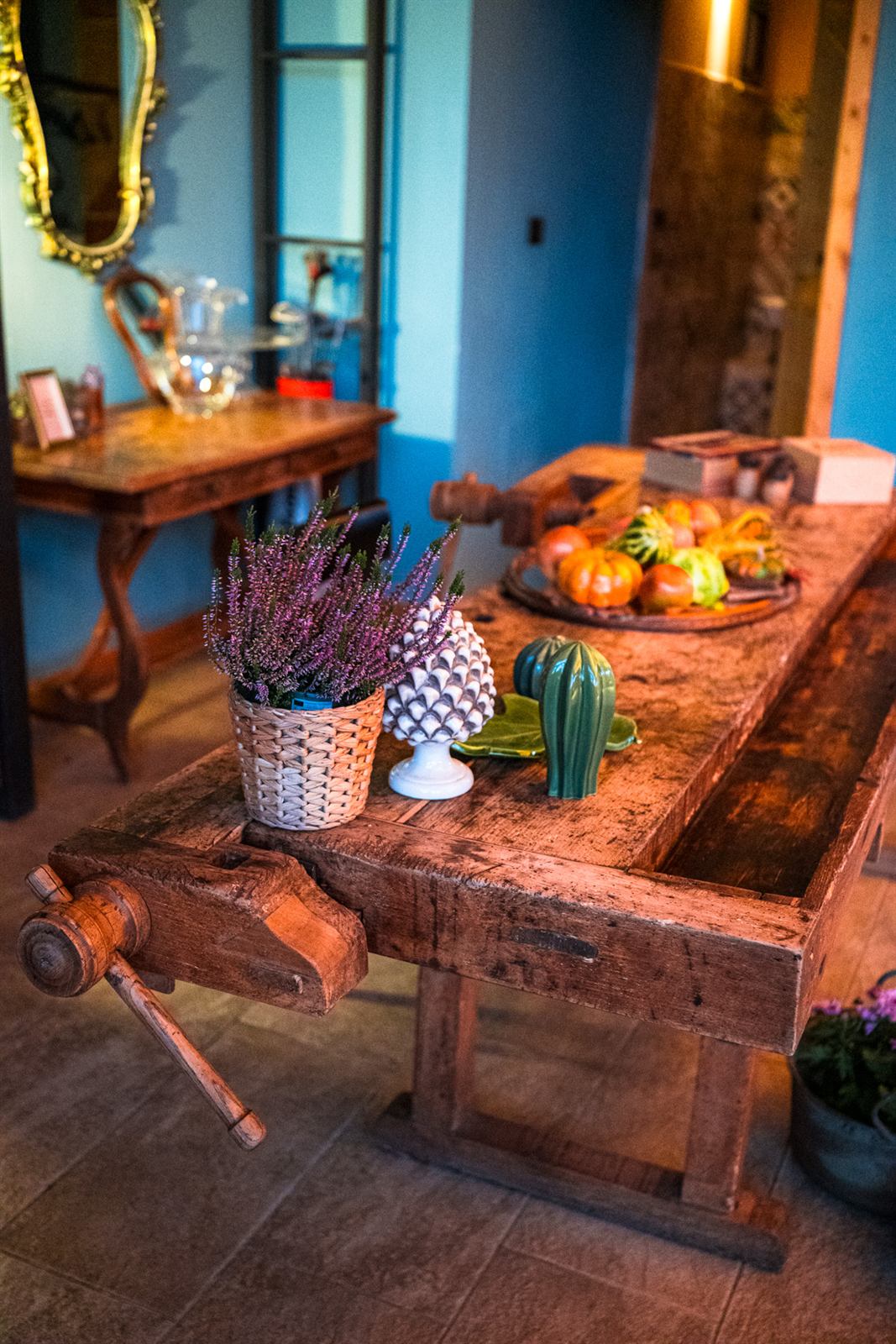
Il piano, spesso 5-10 cm e lungo anche 2,5 metri, in legno duro come faggio o quercia, doveva essere pesante e rigido abbastanza da non muoversi sotto i colpi di pialla o di martello. Ai due lati si trovano le morse: quella di coda, con i suoi fori, i cani, permetteva di bloccare tavole lunghe lungo tutta la superficie; quella frontale serviva per il taglio e l'intaglio. Al centro corre il truogolo, la scanalatura incassata visibile anche nel nostro banco, dove il falegname teneva trucioli, chiodi e piccoli attrezzi sempre a portata di mano. The top, five to ten centimetres thick and up to two and a half metres long, in a hard wood such as beech or oak, had to be heavy and rigid enough not to shift under the blows of a plane or a mallet. On either side are the vices: the tail vice, with its holes for the dogs, could clamp long boards across the whole surface; the front vice was for sawing and carving. Down the middle runs the tool tray, the recessed channel you can still see in our bench, where the carpenter kept shavings, nails and small tools within reach.
Una curiosità / One last thing
Un falegname romano, se si materializzasse oggi in una bottega, riconoscerebbe quasi tutto: pialle, banchi e morse sono cambiati pochissimo in duemila anni. È uno degli attrezzi perfezionati una volta sola, e mai davvero superati. A Roman carpenter, if he turned up in a workshop today, would recognise almost everything: planes, benches and vices have barely changed in two thousand years. It is one of those tools that was perfected once, and never really surpassed.
Il nostro banco, con la sua morsa di coda ancora intatta, è arrivato fino a qui portando i segni di generazioni di lavoro. Se passate da Frangivento, fermatevi a guardarlo da vicino. Our bench, its tail vice still intact, has come all this way carrying the marks of generations of work. If you pass by Frangivento, stop and take a closer look.
Foto: Tonio Carnevale Photos: Tonio Carnevale