La raccolta delle olive, come la facciamo noi Harvesting olives, the way we do it
Ogni anno, quando arriva il momento delle olive, a Frangivento il problema è sempre lo stesso: le braccia. Nei giorni di raccolta si trova poco personale. La poca manodopera che c'è serve a tutti nelle stesse settimane. Per questo, negli anni, abbiamo smesso di aspettare aiuto e ci siamo costruiti un sistema nostro. Un attrezzo alla volta, comprato quando si poteva. Every year, when olive time comes round, Frangivento faces the same problem: hands. At harvest time it is hard to find people to work. What little help there is, everyone needs in the same few weeks. So over the years we stopped waiting for help and built a system of our own. One machine at a time, bought when we could.
Il primo acquisto: il rullo / The first purchase: the roller
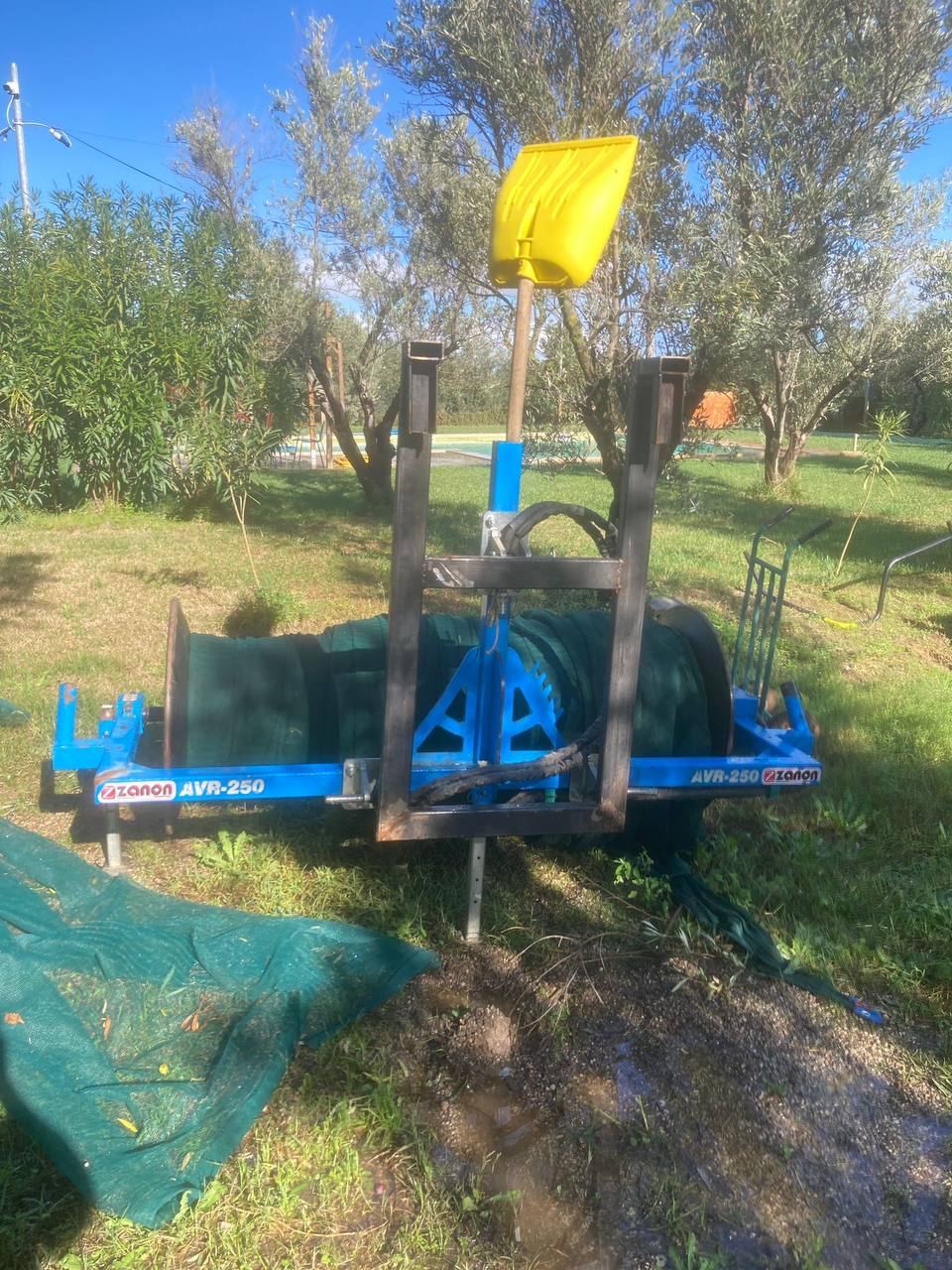
Il primo pezzo è stato un rullo che stende e raccoglie la rete. Le nostre reti sono lunghe 50 metri e coprono circa otto piante in fila. Il rullo le stende sotto gli ulivi in qualche minuto. Quando la rete è piena, la riavvolge in due-cinque minuti, già carica di olive, e la porta in fondo alla fila. The first piece was a roller that lays out the net and gathers it back in. Our nets are 50 metres long and cover about eight trees in a row. The roller spreads them under the olive trees in a few minutes. When the net is full, it winds it back in two to five minutes, olives and all, and carries it to the end of the row.
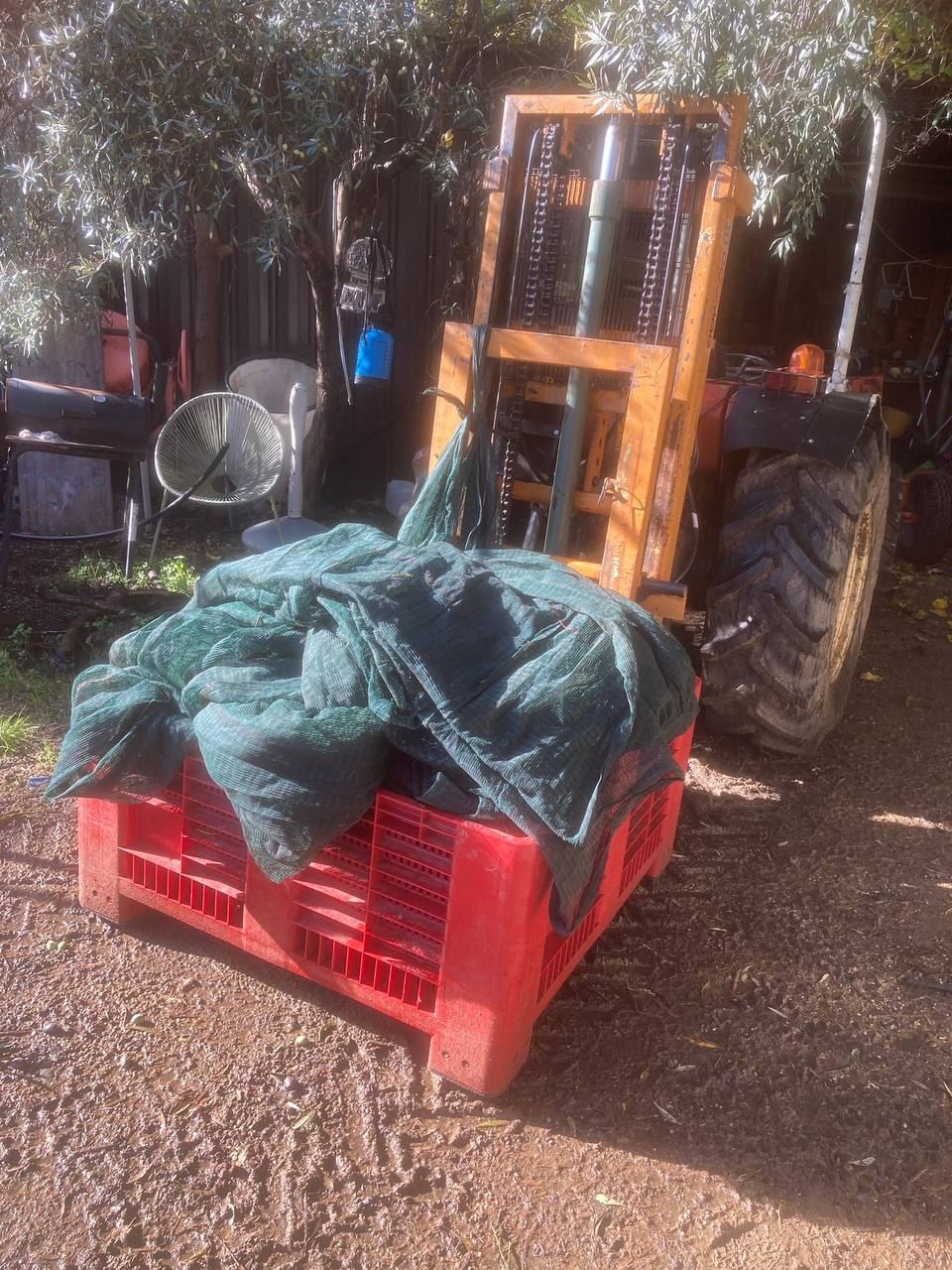
Il rullo lavora agganciato al muletto del primo trattore. Per attaccarlo e staccarlo in fretta abbiamo costruito noi una struttura nera, che si vede nella prima foto. Con il muletto sono cambiati anche i contenitori: prima le olive finivano nelle cassette, ora vanno nei bins. The roller works hooked onto the forklift of the first tractor. To hitch and unhitch it quickly, we built a black frame ourselves; you can see it in the first photo. The forklift changed the containers too: the olives used to go into crates, now they go into bins.
Una fila, passo per passo / One row, step by step
Su ogni fila il lavoro segue sempre lo stesso ordine. Per primo passa il trattore con il rullo, che stende la rete lungo il filare, sotto le piante. Every row is worked in the same order. First comes the tractor with the roller, laying the net along the row, under the trees.
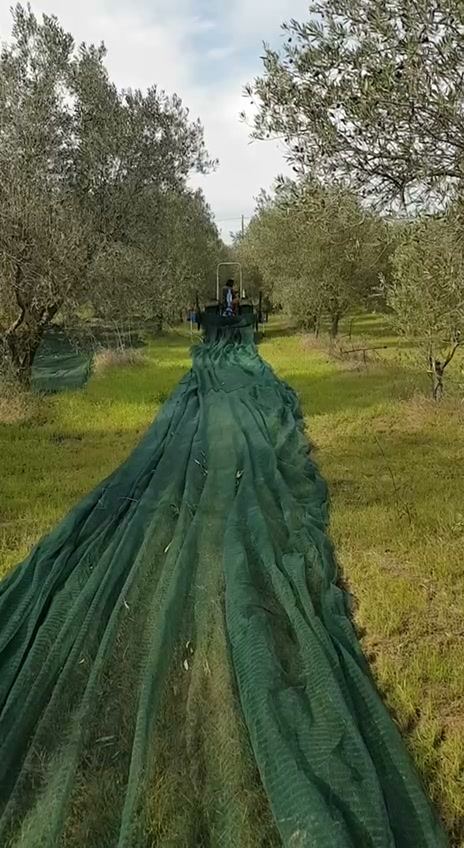
Poi arriva il secondo trattore, con lo scuotitore da tronco. La pinza afferra il tronco e scuote la pianta, e le olive cadono sulla rete. Then the second tractor arrives, with the trunk shaker. Its clamp grips the trunk and shakes the tree, and the olives fall onto the net.
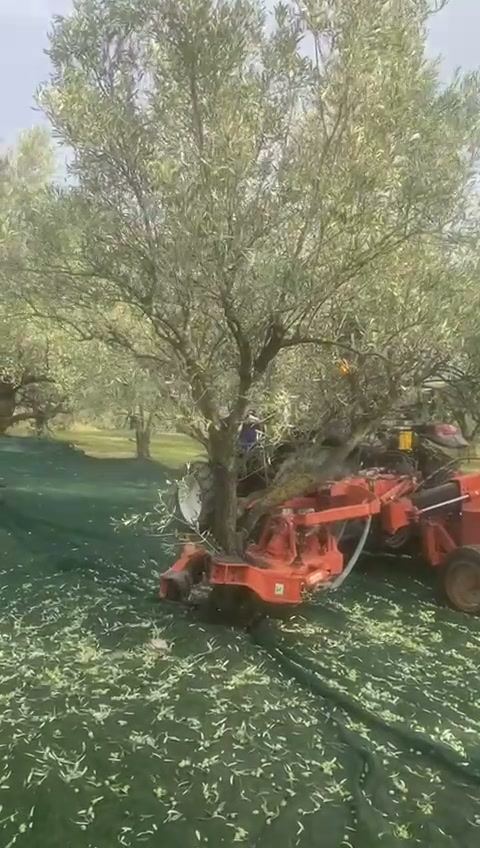
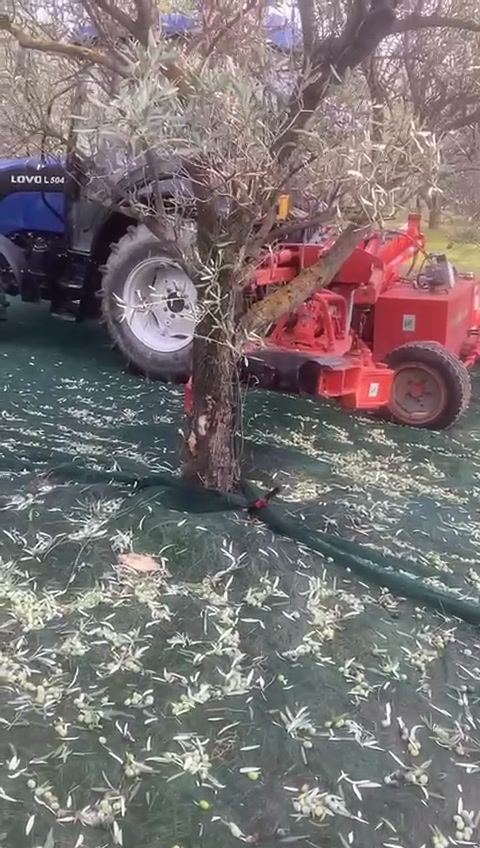
Quello che resta sui rami lo togliamo con l'abbacchiatore, pianta per pianta, finché le olive sono tutte a terra. Whatever is left on the branches we take down with the olive beater, tree by tree, until every olive is on the ground.
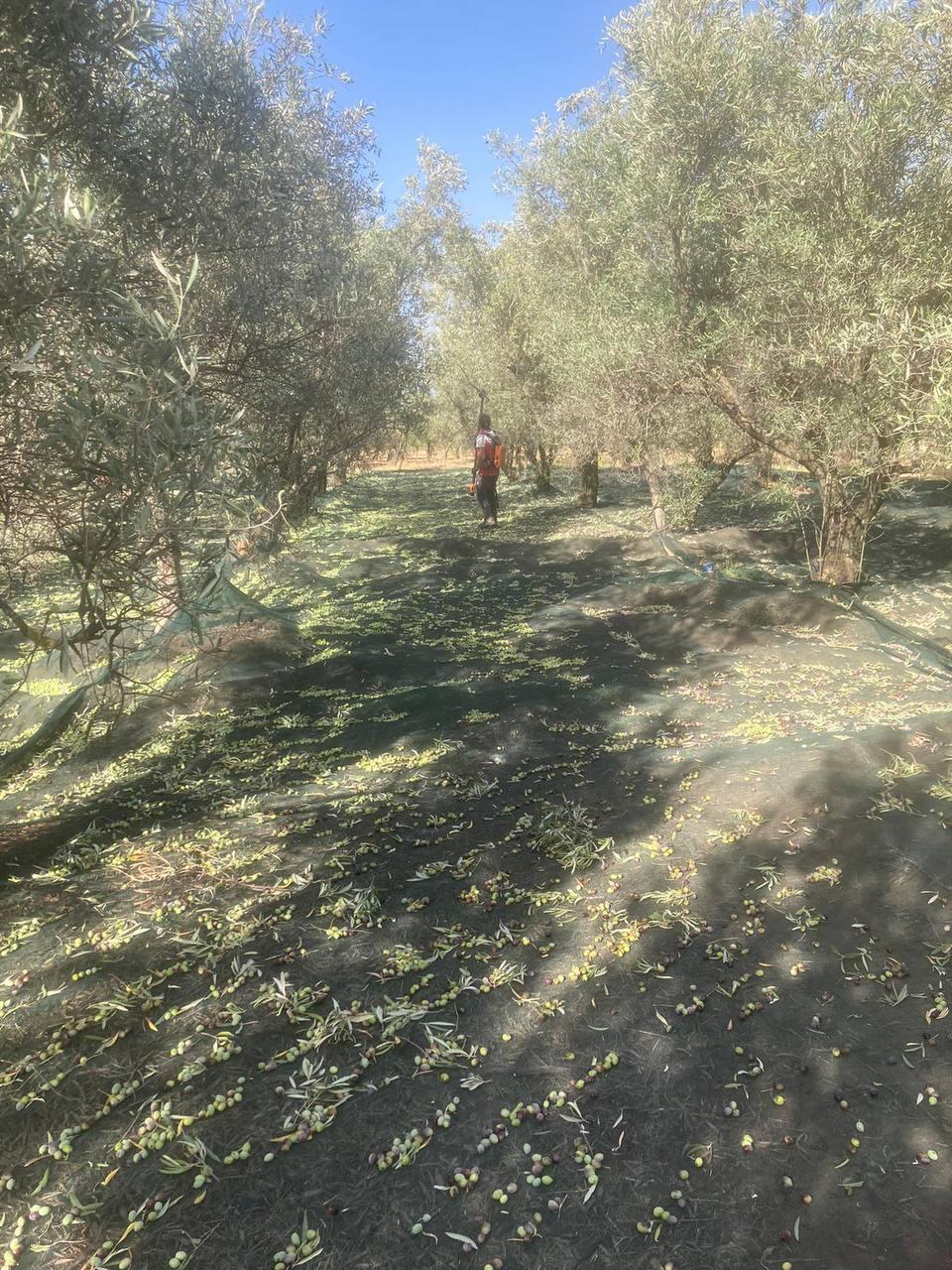
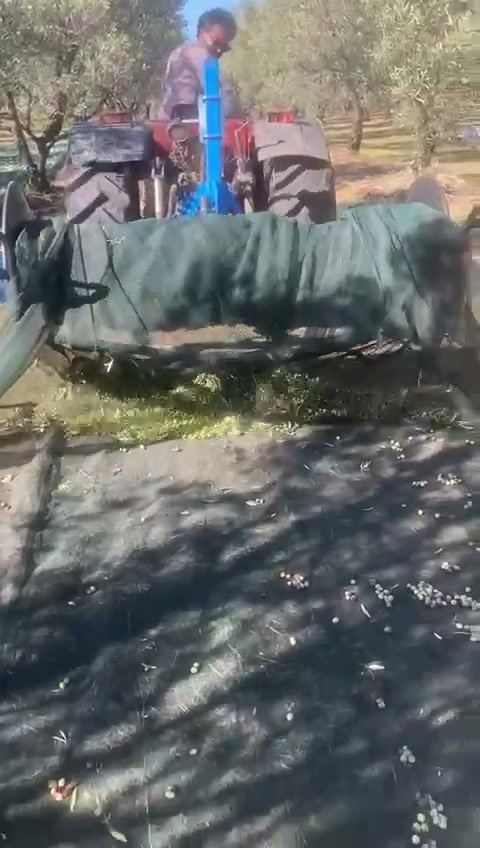
A quel punto il primo trattore torna sulla fila. Il rullo riavvolge la rete con tutto il suo carico e porta le olive in fondo al filare. Then the first tractor comes back along the row. The roller winds up the net with its whole load and carries the olives to the end of the row.
Dal mucchio al frantoio / From the pile to the mill
In fondo alla fila la rete si svuota e si forma il mucchio. Da lì le olive passano con la pala nei bins. Il muletto carica i bins sul camion, e il camion le porta al frantoio. Poi si ricomincia dalla fila successiva, con la rete vuota. At the end of the row the net empties and the pile forms. From there the olives go into the bins by shovel. The forklift loads the bins onto the truck, and the truck takes them to the mill. Then we start again on the next row, with an empty net.
Una persona sola / One person alone
Spesso, alla raccolta, c'è una persona sola. Ed è proprio per questo che il sistema è nato così. Con questi attrezzi una persona da sola raccoglie in una giornata tra tre e quattro bins, a seconda di quanto sono cariche le piante. Non è un record da raccontare. È abbastanza da giustificare la giornata, ed era quello che ci serviva negli anni in cui le braccia non si trovavano. Often, at harvest time, there is just one person. That is exactly why the system turned out the way it did. With these machines one person alone can pick between three and four bins in a day, depending on how heavy the trees are. It is not a record worth boasting about. It is enough to make the day worthwhile, and that is what we needed in the years when there were no hands to be found.
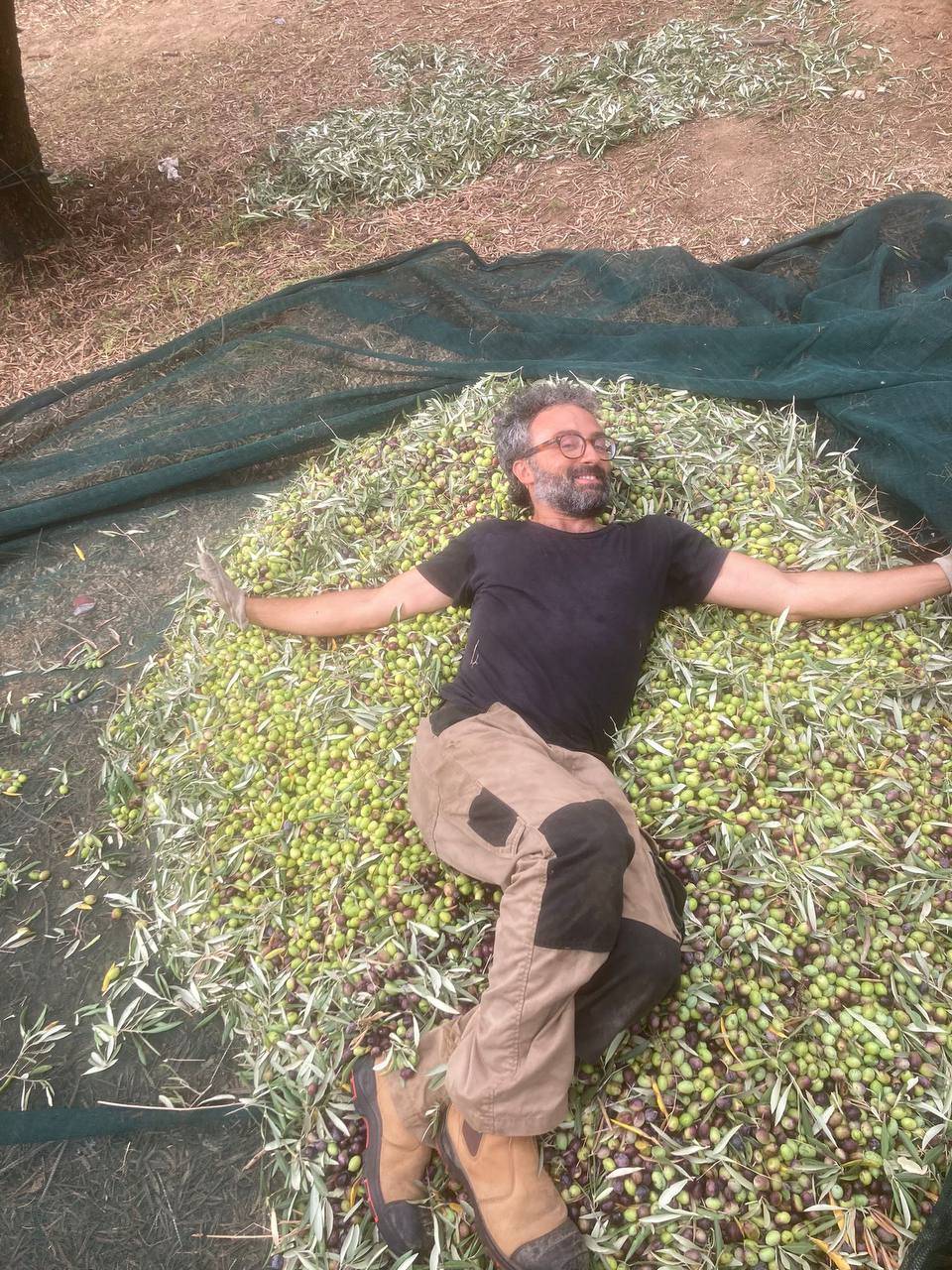
Quando l'olio nuovo arriva in tavola, pensate anche a quel mucchio in fondo alla fila e alla strada che ha fatto per arrivare fin lì. When the new oil reaches the table, think of that pile at the end of the row, and of the road it travelled to get there.
Foto: Agriturismo Frangivento Photos: Agriturismo Frangivento